Why Optimal Clearance is Key to Maximize Solar Power Plant Performance

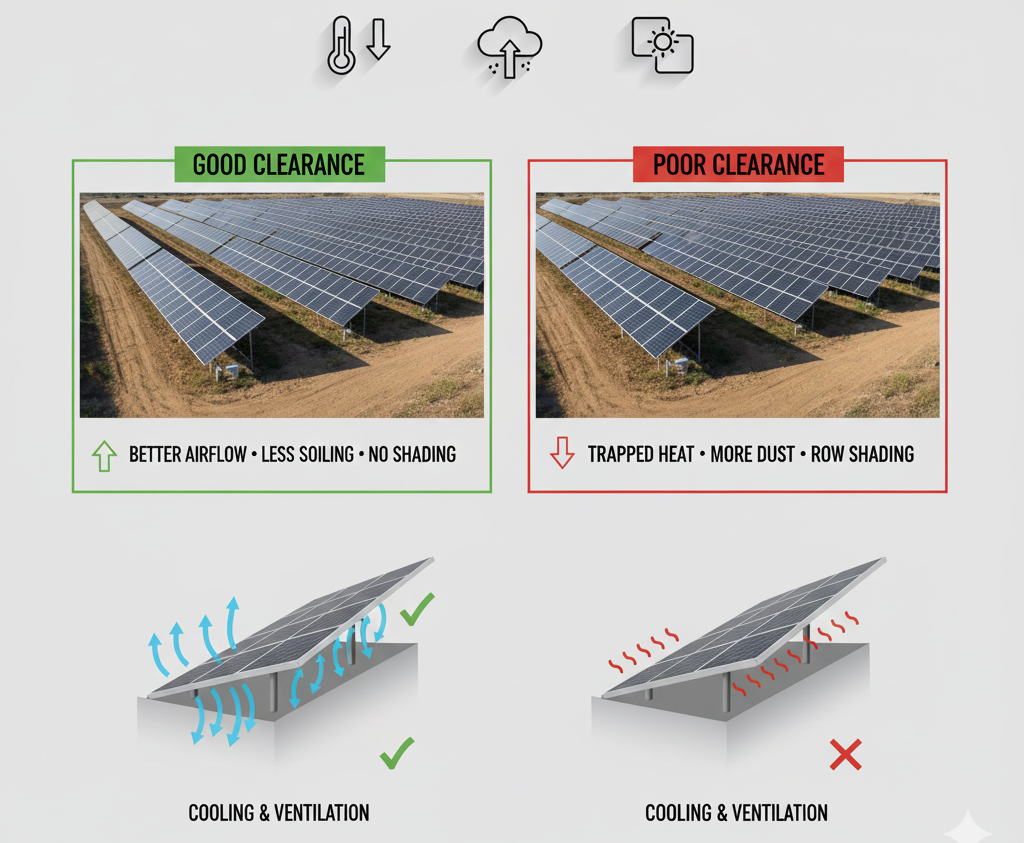
When engineering a large-scale Photovoltaic (PV) power plant, the focus often centers on the solar panels and high-tech inverters. However, a less obvious detail—clearance (the precise vertical space between the solar modules and the ground, and horizontal spacing between rows)—is a critical factor that directly controls long-term performance, efficiency, and operational costs.

The Hidden Performance Drivers of PV Clearance

Choosing the correct clearance impacts four essential areas of solar farm profitability:

1. Thermal Management & Cooling

Solar panels lose efficiency when they overheat. Without adequate ground clearance, heat is trapped beneath the modules, severely restricting natural airflow and ventilation. In hot climates, proper spacing can significantly enhance cooling, thereby preventing performance degradation and boosting energy output by several percentage points.

2. Minimizing Soiling and Snow Loss

Panels installed too close to the ground are susceptible to environmental factors that reduce output:

  • Soiling: Low installation heights increase the collection of wind-blown dust, sand, and mud splashes, accelerating module degradation and necessitating more frequent, costly cleaning cycles.
  • Snow Accumulation: In cold regions, insufficient clearance means snow cannot slide off easily or melt from the module’s edge, leading to prolonged energy production loss.

3. Preventing Inter-Row Shading

Clearance directly influences the required row spacing. If panels are positioned too closely or too low, one row will cast shadows onto the next, particularly during winter when the sun’s path is low. Even minor shading dramatically reduces energy harvest across the affected modules.

4. Operational Efficiency and Safety

Sufficient height and spacing are vital for site Operations and Maintenance (O&M). Optimal clearance provides safe, easy access for technicians to inspect wiring, maintenance equipment, and mounting structures, reducing labor time and minimizing the risk of accidental component damage.

Finding the PV Clearance Sweet Spot

The ideal clearance is not uniform; it is a complex balance determined by several variables: local climate, specific soil type, regulatory codes, panel tilt angle, and potential wind loads.

While insufficient clearance causes overheating, shading, and soiling, excessive height increases structural material costs and exposes the system to higher wind stress. The goal is an optimized clearance design that maximizes solar energy capture while maintaining structural and budgetary efficiency.

Conclusion: Strategic clearance design is a cornerstone of PV system reliability. By optimizing ventilation, mitigating soiling, and ensuring safe maintenance access, solar developers ensure their power plant operates at its peak efficiency, delivering maximum return on investment.
Maximizing Solar ROI: The Critical Impact of Soil Type on PV Plant Performance

Maximizing Solar ROI: The Critical Impact of Soil Type on PV Plant Performance

When planning a new Photovoltaic (PV) power plant, the focus often lands on high-tech components: the panels, the inverters, and the sophisticated mounting systems. However, industry experts understand that one silent, foundational element dictates long-term efficiency and capital expenditure: the site’s soil type.

A comprehensive geotechnical analysis is not just a regulatory hurdle—it’s an essential strategy for preventing costly structural failures, minimizing maintenance, and ensuring decades of optimal energy output.

Why Neglecting Soil Can Cost Your Solar Project Millions

Soil conditions are critical because they affect nearly every phase of solar development and operation:

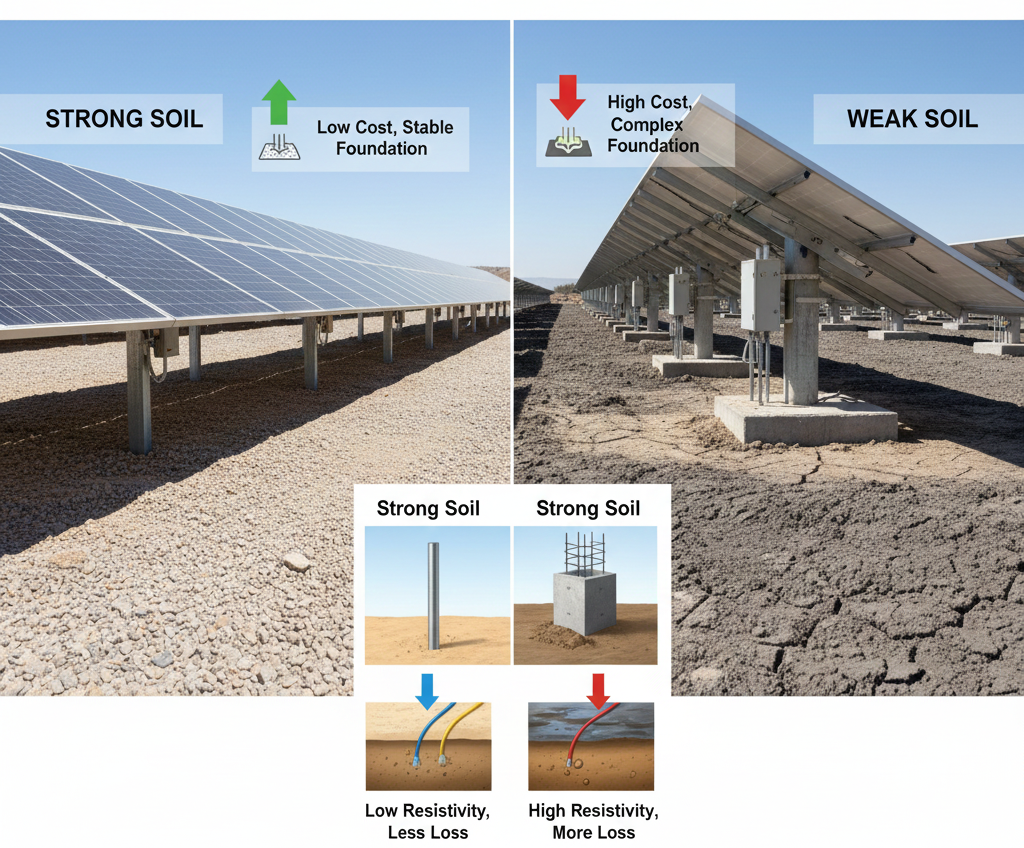
  • Foundation Integrity: Dictates the type, depth, and cost of mounting structures.
  • Cable Management: Influences trenching difficulty and the thermal performance of buried cables.
  • Operational Efficiency: Directly relates to dust accumulation (soiling) and cleaning frequency.
  • Safety & Compliance: Determines the required effectiveness of the site’s electrical grounding system.

Common Soil Types: Pros, Cons, and PV Impact

Soil TypeAdvantages for PVChallenges for PVKey Performance Impact
1. Sandy Soil (e.g., Deserts, Central Iran)Easy to excavate; excellent drainage; low frost heave risk.Low mechanical strength (requires deep foundations); High wind erosion (severe dust/soiling).High O&M costs (cleaning); Increased foundation expenditure.
2. Clay SoilStrong base when compacted; good electrical conductivity for grounding.Expansion/Contraction (risk of foundation movement); Poor drainage (water pooling).Structural risk (foundation damage); Requires expensive geotechnical stabilization.
3. Rocky/Hard SoilExceptional long-term stability; minimal erosion or shifting.Difficult and expensive drilling (specialized equipment needed); Longer installation timeline.High initial CapEx for installation; Lowest maintenance post-installation.
4. Loamy Soil (Sand, Silt, Clay mix)Good support; easier trenching; moderate drainage and erosion.Moderate dust levels; may require compaction/geogrid reinforcement.Considered ideal for balanced performance and moderate construction costs.

Soil’s Invisible Threat: Electrical and Thermal Performance

Beyond structural concerns, soil dictates critical electrical characteristics:

  1. Soiling and Output Loss: Fine soil particles (from sandy or silty sites) are easily lofted by wind, causing soiling. This can slash energy output by 5–30% between cleaning cycles, making advanced robotic cleaning systems a necessity in vulnerable regions.
  2. Grounding System Effectiveness: The soil’s electrical resistivity is paramount for effective grounding. Dry, sandy soil has high resistivity, requiring extra-long grounding rods or chemical solutions to meet safety standards. Moist clay, conversely, offers excellent conductivity.
  3. Cable Performance: Soil acts as a thermal conductor for buried cables. If the soil is too dry (high thermal resistivity), heat is trapped, increasing cable temperature, raising electrical resistance, and wasting generated power.

The Bottom Line for Solar Developers

Soil type is not merely a construction detail; it fundamentally drives the project’s cost, risk, and profitability.

To achieve true long-term stability and reliable returns on investment, every solar project must begin with a deep, comprehensive geotechnical and site assessment. Choosing the right foundation design, cleaning strategy, and electrical solution based on soil science is the hallmark of a successful, enduring solar power plant.

How Solar Panel Tilt Angle Impacts Efficiency and Energy Output

Choosing the right tilt angle for solar panels is one of the most important design decisions in any photovoltaic (PV) project. The tilt angle directly affects how much sunlight the modules receive throughout the year, which means it has a major influence on energy yield, system efficiency, and long-term performance. Whether the installation is a rooftop system, a utility-scale solar farm, or a commercial project, optimizing the tilt angle can significantly increase annual power generation.

What Is Tilt Angle?

The tilt angle refers to the angle between the solar panel and the ground. A properly adjusted tilt allows panels to face the sun more directly, minimizing reflection losses and maximizing energy absorption.

Why Tilt Angle Matters

  1. Maximum Sun Exposure
    Solar panels produce the highest output when sunlight hits the surface at a 90-degree angle. Even small deviations from this angle over long hours can reduce total daily and yearly production.
  2. Higher Annual Energy Yield
    Engineers typically design tilt angles based on the project’s geographic latitude. A well-optimized tilt improves the capacity factor of the system, making each panel generate more energy without adding extra hardware.
  3. Seasonal Optimization
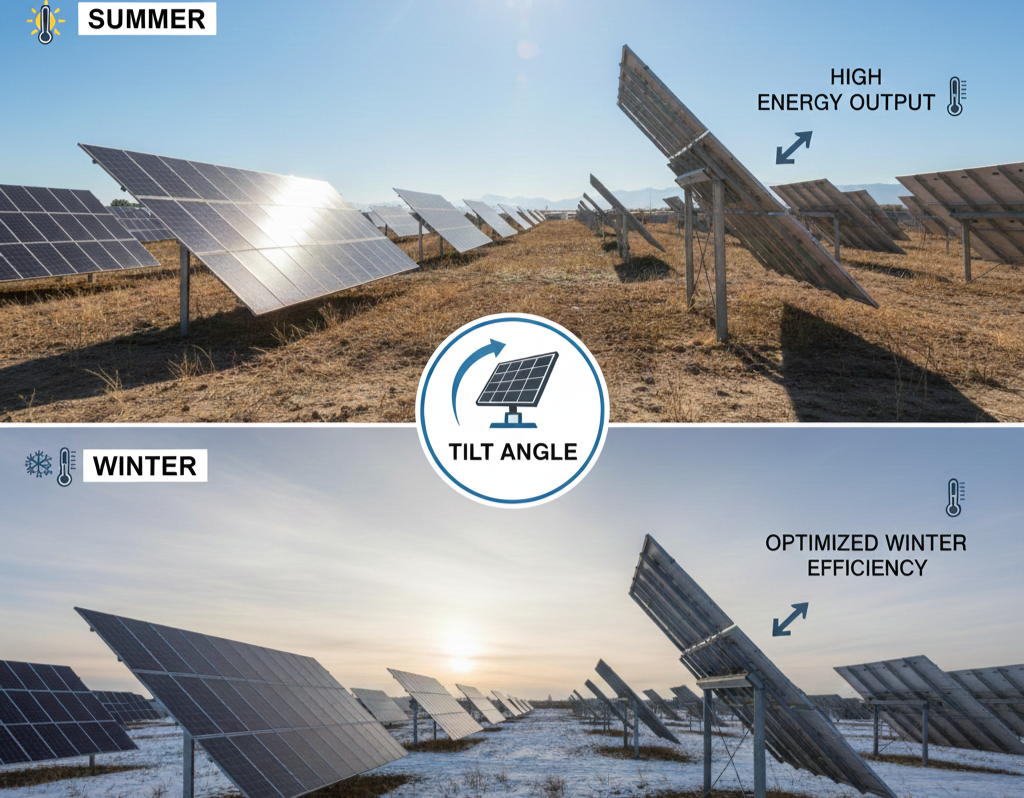
    • In summer, the sun is high in the sky, so a lower tilt increases performance.
    • In winter, the sun is lower, so a steeper angle captures more energy.
      Fixed-tilt systems usually aim for a balanced angle that performs well across all seasons.
  4. Reduced Dust and Self-Cleaning Benefits
    A proper tilt angle also helps rainwater wash away dust and debris. This reduces soiling losses and improves long-term efficiency, especially in desert regions like central and southern Iran.
  5. Lower Maintenance & Better Cooling
    The right tilt helps airflow behind the modules, reducing heat buildup and improving performance. Cooler panels operate more efficiently, especially in hot climates.

Optimal Tilt Angle by Location

A general rule of thumb is to set the tilt angle close to the latitude of the installation site. For example:

  • Tehran (~35° latitude) → ~30–35° tilt
  • Qom (~34° latitude) → ~30–34° tilt
  • Muscat & Sohar (~24–26°) → ~20–25° tilt

However, engineering teams often adjust this based on:

  • annual irradiation data,
  • shading analysis,
  • mounting structure design,
  • project objectives (maximum winter output, maximum annual output, or grid-feed optimization).

Tracking Systems vs. Fixed Tilt

While fixed-tilt systems rely on a single optimized angle, single-axis trackers follow the sun’s daily movement, reducing angle mismatch and boosting annual energy production by 15–25% in many regions.

Conclusion

The tilt angle of solar panels directly affects the system’s ability to capture sunlight and convert it into clean energy. By choosing the right angle based on latitude, seasonal patterns, and project requirements, companies can significantly improve efficiency and long-term performance.

At Asare Taban Giti, we design every solar project with precise tilt-angle optimization, ensuring maximum return on investment for commercial, industrial, and utility-scale clients.

Solar Energy: The Clean Power Solution Shaping the Future

Solar energy has become one of the most important pillars of the global shift toward clean and renewable power. With rising energy costs and increasing demand for sustainable solutions, businesses and governments are rapidly investing in solar power as a reliable, cost-effective, and environmentally friendly alternative.

What Is Solar Energy?

Solar energy refers to the conversion of sunlight into electricity using solar panels (PV modules) or solar thermal systems. It is a renewable energy source that is abundant, low-maintenance, and suitable for both small-scale and large-scale projects.

Key Benefits of Solar Power

1. Significant Reduction in Energy Costs

Solar power helps businesses cut long-term electricity expenses. Once installed, solar panels generate electricity at almost zero operational cost, stabilizing energy prices and reducing dependency on fossil fuels.

2. Clean and Environmentally Friendly

Solar energy produces no emissions during operation. Switching to solar power reduces carbon footprint, improves air quality, and supports global sustainability goals.

3. High Solar Potential in Many Regions

Countries in the Middle East and Asia benefit from strong solar irradiation levels. Places like Iran, Oman, and the Gulf region offer ideal conditions for high-efficiency solar plants.

4. Rapid Technology Improvements

New high-efficiency panels, smarter inverters, and advanced monitoring systems allow modern solar plants to produce more power with less land and lower cost.

5. Energy Independence for Businesses

Solar projects help companies secure stable, predictable electricity — especially important for industries facing energy volatility or high grid tariffs.

How Solar Power Helps Businesses Grow

Solar energy is more than a sustainability initiative; it is a strategic investment. Businesses using solar power benefit from:

  • Lower operational costs
  • Higher ESG scores
  • Better brand reputation
  • Compliance with international green standards
  • Long-term financial savings

Many companies now integrate solar plants into their operations to gain energy security and modernize their infrastructure.

Applications of Solar Energy

Solar power can be used across many sectors:

  • Industrial facilities
  • Commercial buildings
  • Agricultural farms
  • Warehouses and logistics centers
  • Remote off-grid locations
  • Utility-scale solar power plants

Its flexibility is one of the reasons solar energy is growing faster than any other renewable technology.

Why Solar Energy Is the Future

With global energy demand increasing and fossil fuel resources becoming less reliable, solar power offers a long-term, sustainable solution. Improved efficiency, lower costs, and government incentives are accelerating the development of solar projects around the world.

Conclusion

Solar energy is transforming the global energy landscape. Whether for industries, businesses, or utility-scale development, solar power provides a clean, affordable, and highly scalable energy solution. For regions with strong sunlight — especially the Middle East and Asia — investing in solar energy is not just an option; it is a strategic advantage.