
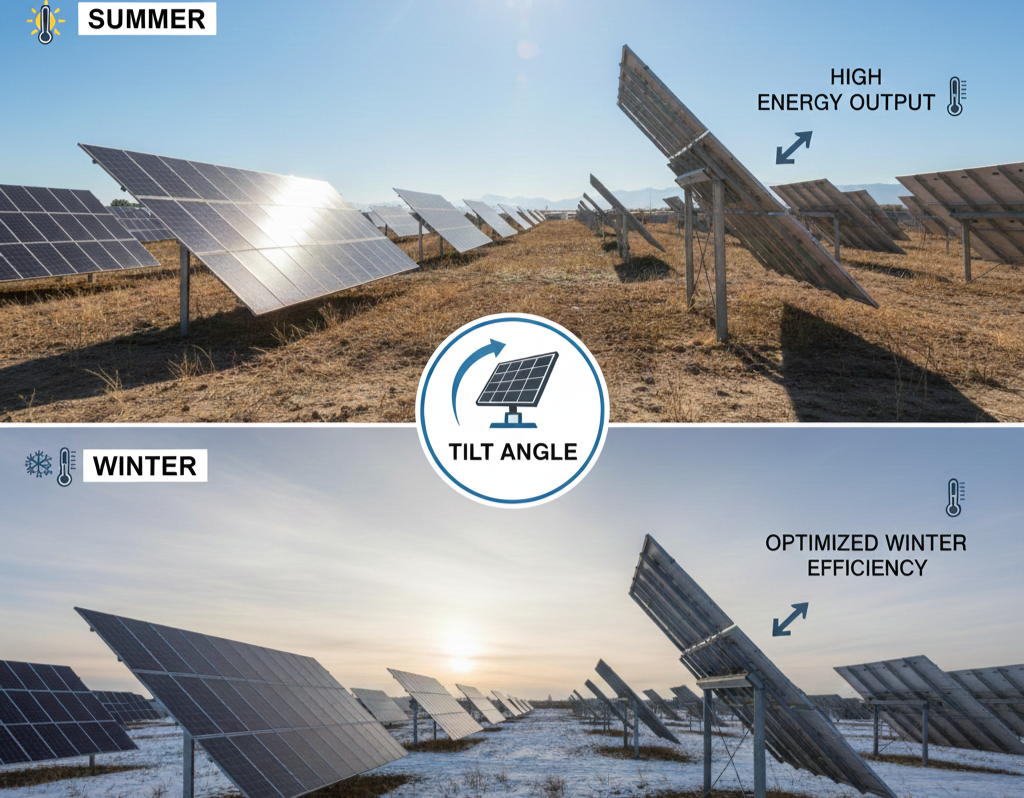
Choosing the right tilt angle for solar panels is one of the most important design decisions in any photovoltaic (PV) project. The tilt angle directly affects how much sunlight the modules receive throughout the year, which means it has a major influence on energy yield, system efficiency, and long-term performance. Whether the installation is a rooftop system, a utility-scale solar farm, or a commercial project, optimizing the tilt angle can significantly increase annual power generation.
What Is Tilt Angle?
The tilt angle refers to the angle between the solar panel and the ground. A properly adjusted tilt allows panels to face the sun more directly, minimizing reflection losses and maximizing energy absorption.
Why Tilt Angle Matters
- Maximum Sun Exposure
Solar panels produce the highest output when sunlight hits the surface at a 90-degree angle. Even small deviations from this angle over long hours can reduce total daily and yearly production. - Higher Annual Energy Yield
Engineers typically design tilt angles based on the project’s geographic latitude. A well-optimized tilt improves the capacity factor of the system, making each panel generate more energy without adding extra hardware. - Seasonal Optimization
- In summer, the sun is high in the sky, so a lower tilt increases performance.
- In winter, the sun is lower, so a steeper angle captures more energy.
Fixed-tilt systems usually aim for a balanced angle that performs well across all seasons.
- Reduced Dust and Self-Cleaning Benefits
A proper tilt angle also helps rainwater wash away dust and debris. This reduces soiling losses and improves long-term efficiency, especially in desert regions like central and southern Iran. - Lower Maintenance & Better Cooling
The right tilt helps airflow behind the modules, reducing heat buildup and improving performance. Cooler panels operate more efficiently, especially in hot climates.
Optimal Tilt Angle by Location
A general rule of thumb is to set the tilt angle close to the latitude of the installation site. For example:
- Tehran (~35° latitude) → ~30–35° tilt
- Qom (~34° latitude) → ~30–34° tilt
- Muscat & Sohar (~24–26°) → ~20–25° tilt
However, engineering teams often adjust this based on:
- annual irradiation data,
- shading analysis,
- mounting structure design,
- project objectives (maximum winter output, maximum annual output, or grid-feed optimization).
Tracking Systems vs. Fixed Tilt
While fixed-tilt systems rely on a single optimized angle, single-axis trackers follow the sun’s daily movement, reducing angle mismatch and boosting annual energy production by 15–25% in many regions.
Conclusion
The tilt angle of solar panels directly affects the system’s ability to capture sunlight and convert it into clean energy. By choosing the right angle based on latitude, seasonal patterns, and project requirements, companies can significantly improve efficiency and long-term performance.
At Asare Taban Giti, we design every solar project with precise tilt-angle optimization, ensuring maximum return on investment for commercial, industrial, and utility-scale clients.