Maximizing Solar ROI: The Critical Impact of Soil Type on PV Plant Performance
When planning a new Photovoltaic (PV) power plant, the focus often lands on high-tech components: the panels, the inverters, and the sophisticated mounting systems. However, industry experts understand that one silent, foundational element dictates long-term efficiency and capital expenditure: the site’s soil type.
A comprehensive geotechnical analysis is not just a regulatory hurdle—it’s an essential strategy for preventing costly structural failures, minimizing maintenance, and ensuring decades of optimal energy output.
Why Neglecting Soil Can Cost Your Solar Project Millions
Soil conditions are critical because they affect nearly every phase of solar development and operation:
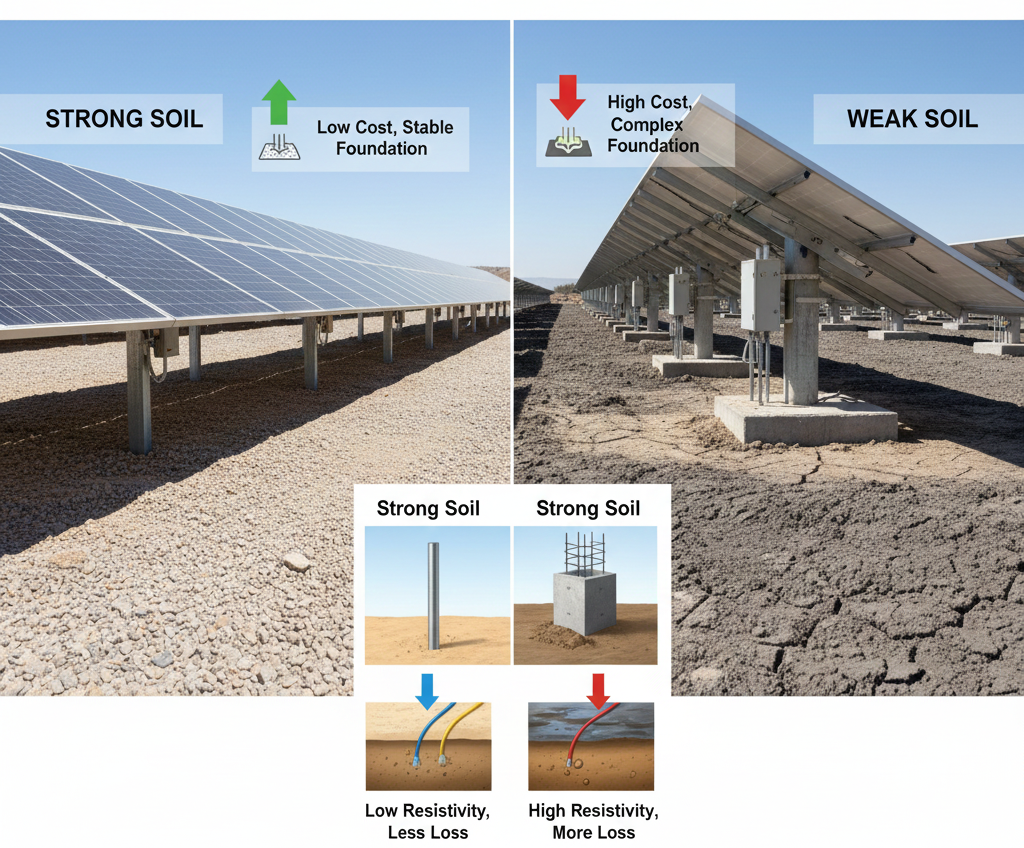
- Foundation Integrity: Dictates the type, depth, and cost of mounting structures.
- Cable Management: Influences trenching difficulty and the thermal performance of buried cables.
- Operational Efficiency: Directly relates to dust accumulation (soiling) and cleaning frequency.
- Safety & Compliance: Determines the required effectiveness of the site’s electrical grounding system.
Common Soil Types: Pros, Cons, and PV Impact
| Soil Type | Advantages for PV | Challenges for PV | Key Performance Impact |
| 1. Sandy Soil (e.g., Deserts, Central Iran) | Easy to excavate; excellent drainage; low frost heave risk. | Low mechanical strength (requires deep foundations); High wind erosion (severe dust/soiling). | High O&M costs (cleaning); Increased foundation expenditure. |
| 2. Clay Soil | Strong base when compacted; good electrical conductivity for grounding. | Expansion/Contraction (risk of foundation movement); Poor drainage (water pooling). | Structural risk (foundation damage); Requires expensive geotechnical stabilization. |
| 3. Rocky/Hard Soil | Exceptional long-term stability; minimal erosion or shifting. | Difficult and expensive drilling (specialized equipment needed); Longer installation timeline. | High initial CapEx for installation; Lowest maintenance post-installation. |
| 4. Loamy Soil (Sand, Silt, Clay mix) | Good support; easier trenching; moderate drainage and erosion. | Moderate dust levels; may require compaction/geogrid reinforcement. | Considered ideal for balanced performance and moderate construction costs. |
Soil’s Invisible Threat: Electrical and Thermal Performance
Beyond structural concerns, soil dictates critical electrical characteristics:
- Soiling and Output Loss: Fine soil particles (from sandy or silty sites) are easily lofted by wind, causing soiling. This can slash energy output by 5–30% between cleaning cycles, making advanced robotic cleaning systems a necessity in vulnerable regions.
- Grounding System Effectiveness: The soil’s electrical resistivity is paramount for effective grounding. Dry, sandy soil has high resistivity, requiring extra-long grounding rods or chemical solutions to meet safety standards. Moist clay, conversely, offers excellent conductivity.
- Cable Performance: Soil acts as a thermal conductor for buried cables. If the soil is too dry (high thermal resistivity), heat is trapped, increasing cable temperature, raising electrical resistance, and wasting generated power.
The Bottom Line for Solar Developers
Soil type is not merely a construction detail; it fundamentally drives the project’s cost, risk, and profitability.
To achieve true long-term stability and reliable returns on investment, every solar project must begin with a deep, comprehensive geotechnical and site assessment. Choosing the right foundation design, cleaning strategy, and electrical solution based on soil science is the hallmark of a successful, enduring solar power plant.